How Drawing Helps Fine Motor Skill Development
Discover how drawing activities help children develop fine motor skills, coordination, and pre-writing abilities through pla
1/9/20262 min read
Why Fine Motor Skills Matter
Fine motor skills are the foundation of many everyday tasks, from holding a pencil to tying shoelaces. In early childhood, developing these small muscle movements is essential for independence, confidence, and future academic success.
Drawing is one of the most effective and enjoyable ways to build fine motor skills. When children draw, they strengthen hand muscles, improve coordination, and practise controlled movements—all while having fun.
What Are Fine Motor Skills?
Fine motor skills involve the use of small muscles in the hands, fingers, and wrists. These skills allow children to perform tasks that require precision and control.
Examples of fine motor skills include:
Holding and controlling a pencil or marker
Tracing shapes and lines
Buttoning clothes and zipping bags
Using scissors and utensils
Developing these skills early helps children feel capable and confident in daily life.
How Drawing Builds Hand Strength and Control
When children draw, they use multiple muscles in their hands and fingers. Repeated drawing motions strengthen these muscles over time, improving grip and endurance.
Activities such as colouring within shapes, tracing lines, and free drawing all contribute to stronger hand control, which is essential for writing later on.
Improving Hand-Eye Coordination Through Drawing
Hand-eye coordination is the ability to coordinate visual input with hand movements. Drawing naturally develops this skill as children focus on guiding their hand to create specific shapes or images.
Better hand-eye coordination supports:
Writing and drawing accuracy
Sports and physical play
Everyday tasks like pouring and eating
Drawing and Pre-Writing Skills
Before children learn to write letters and numbers, they need to master basic movements such as lines, curves, and shapes. Drawing provides the perfect practice for these pre-writing skills.
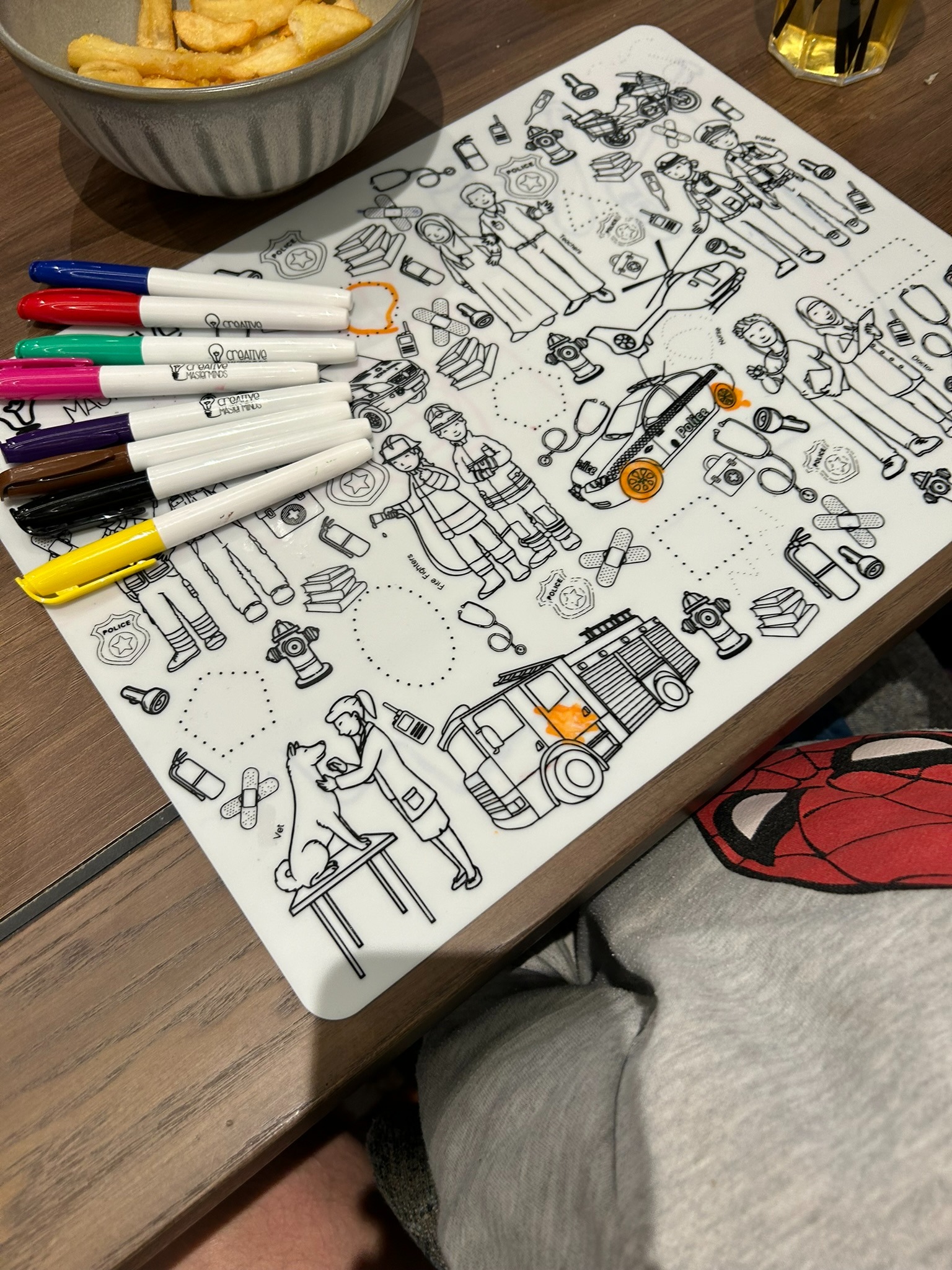
Reusable drawing mats allow children to practise these movements repeatedly without pressure, helping them build confidence and control.
The Importance of Repetition Without Pressure
Repetition is key to skill development, but pressure can discourage learning. Wipe-clean drawing surfaces allow children to practise again and again without fear of mistakes.
This freedom encourages experimentation and persistence, both of which are crucial for skill mastery.
Supporting Different Developmental Stages
Drawing activities can be adapted to suit different ages:
Toddlers benefit from free scribbling and simple shapes
Preschoolers enjoy tracing letters, numbers, and patterns
Older children can practise detailed drawings and early writing
Reusable drawing mats grow with the child, offering long-term developmental value.
Fine Motor Skills and School Readiness
Strong fine motor skills help children transition smoothly into school. Children who can control writing tools and follow simple patterns often feel more confident in classroom settings.
Drawing-based activities support readiness for tasks such as handwriting, art projects, and independent work.
How Parents Can Encourage Fine Motor Development at Home
Parents can support fine motor skills by:
Offering drawing opportunities daily
Providing mess-free, reusable tools
Encouraging effort rather than perfection
Making drawing a fun, pressure-free activity
FAQ – Drawing and Fine Motor Skills (Schema-Ready)
Q: How does drawing improve fine motor skills?
A: Drawing strengthens hand muscles, improves coordination, and helps children practise controlled movements needed for writing.
Q: At what age should kids start drawing?
A: Children can begin scribbling as early as 12–18 months, with skills developing through toddler and preschool years.
Q: Are reusable drawing mats good for fine motor development?
A: Yes. They allow repeated practice without pressure, which is essential for skill building.
Q: How often should children practise drawing?
A: Short, regular drawing sessions are ideal for developing fine motor skills.
Scribbly Kids
(Formerly Creative Masterminds) – same great reusable drawing mats, now with a fresh new name!”
Contact
info@scribblykids.com.au
© 2023. All rights reserved.